Remembering the Ogoni Nine 30 Years Onwards
Reflections on Legal Strategies for Decolonial Climate Justice
- Date
- 30 October 2025
- Time
- 16:00 -18:00
- Location
- BG 3
- Room
- VOX-POP
Practical
Attendance is free, though we kindly ask you to register in advance.
On November 10, 1995, nine anti-oil activists from Ogoni, Nigeria, were executed by the Nigerian government after a sham trial. The “Ogoni Nine”, as they would later be called, had played a key role in the growing popular resistance against the oil extraction in the Niger Delta by Royal Dutch Shell and the Nigerian military dictatorship. In 2025, thirty years after their execution, the Nigerian government issued an official pardon–a gesture widely condemned by the victims’ families, local communities, and human rights organisations as woefully inadequate given the ongoing environmental and social devastation in the Niger Delta caused by foreign oil companies.
Over the years, families of the Ogoni 9 and communities in the Niger Delta have repeatedly used litigation before Dutch and UK courts, amongst others, to demand reparations for the murders and an end to the environmental destruction caused by oil extraction, with varying success. This event marks the anniversary of the murder of the Ogoni Nine as both a moment of commemoration and a space for critical reflection on the role of law in the ongoing struggle for decolonial climate justice.
This programme brings together activists, scholars, and legal experts working on decolonial climate justice in Nigeria, the Netherlands, and beyond. Together, they will discuss the links between the fossil fuel industry and colonial violence, and explore how litigation can be used to demand reparations for affected families and communities, as well as to push for a just energy transition. We will take a critical look at both the possibilities and limits of litigation as a tool of empowerment for people who are often excluded from political decision-making. The discussion will also explore the role of European courts and legal systems in addressing environmental crimes and violence in the Global South, and question what a just and fair transition really means in a world still shaped by extractivism and global inequality.
This event is co-funded by the Amsterdam Centre for European Studies (ACES) and the Amsterdam School for Regional, Transnational and European Studies (ARTES).
Programme
15:45 – Doors open
16:00 – Introduction: A brief history of Shell in Nigeria and the Ogoni 9, introduction to the event
16:20 – Panel discussion
17:00 – Q&A: Floor is open to audience questions
17:45 – 18:00 Closing of event with short address, a moment of silence, and a music performance
Speakers
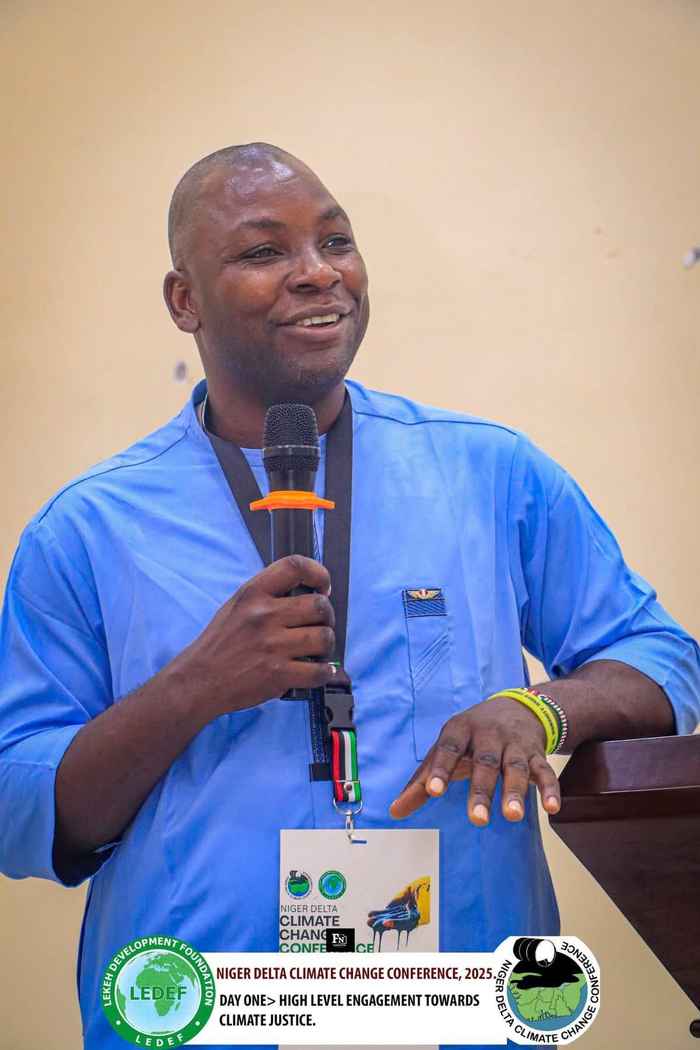
Nbani Friday Barilule is the Founder and Executive Director of the Lekeh Development Foundation. He works at the intersection of environmental justice, renewable energy, youth empowerment, and climate policy. Friday has represented Niger Delta communities at international climate negotiations (COP27, COP28, and COP29) and is the convener of the Niger Delta Climate Change Conference—now in its third year—bringing together government officials, oil companies, civil society, traditional rulers, and youth. He also led the Solar-preneurship Empowerment Programme, supported by UNDP–GEF–SGP Nigeria, training 100 young people in Khana to become renewable energy entrepreneurs, creating sustainable livelihoods while tackling energy poverty. In addition, the Lekeh Development Foundation co-organized the Heroes Week of Action to commemorate the Ogoni Nine in Nigeria.
Friday’s vision for climate justice extends beyond Nigeria, as he works to develop models that can support and uplift oil-impacted communities across Africa and around the world.
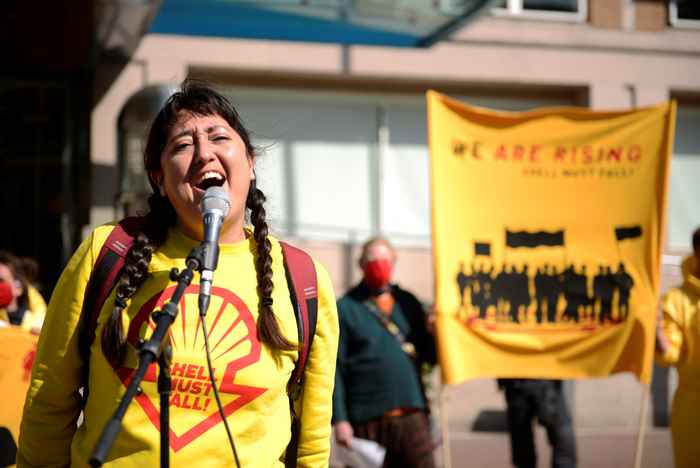
Chihiro Geuzebroek is an artist and activist dedicated to climate justice and decolonization. She has done climate justice advocacy since 2009 and has put the issue of climateracism on the map in the Netherlands. She is co-founder of Stichting Aralez dedicated to decolonisation and reparatory justice. Chihiro wrote the song Shell Must Fall in 2019 and was involved in the Shell Must Fall Campaign. In 2020 she made the exhibition People Powered Movement vs Shell.
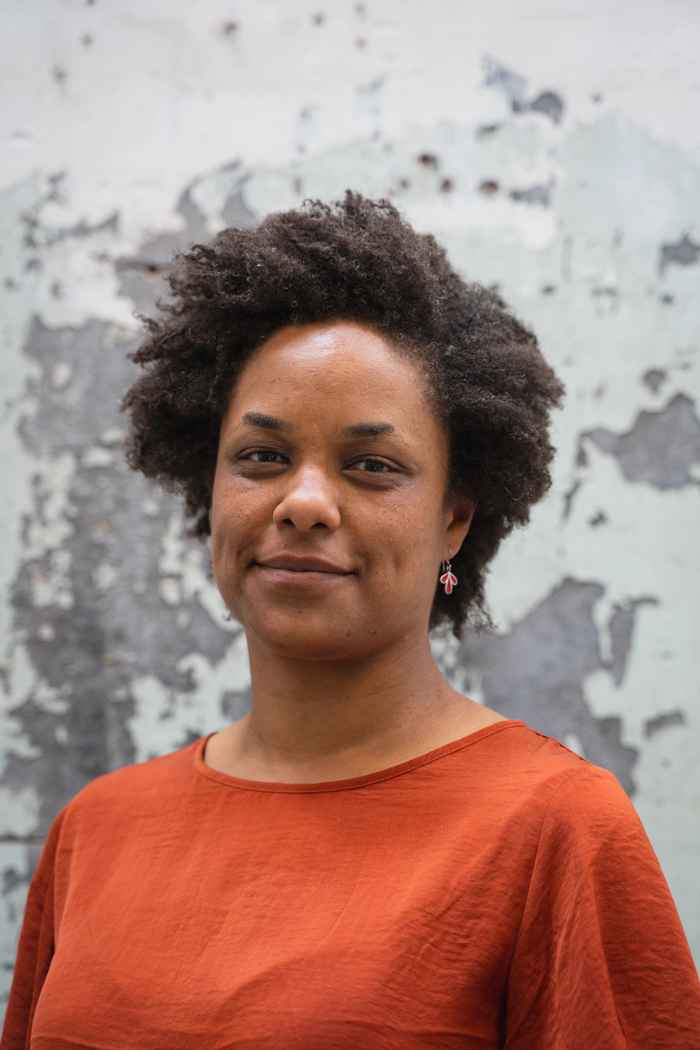
Obiozo Ukpabi is a researcher and facilitator with a background in economic and social history (UvA, NYU) and a Master’s in Justice and Transformation from the University of Cape Town. Her experience as a journalist in Nigeria’s Niger Delta shaped her interest in narratives of injustice, conflict, and repair. She has facilitated multi-stakeholder dialogues on land reform and inequality in South Africa and worked internationally on peacebuilding, democracy, and artistic collaborations exploring storytelling and memory. Since 2020, she has pursued a PhD at the University of Humanistic Studies on transnational legal action by Niger Delta residents against Shell and their pursuit of justice.
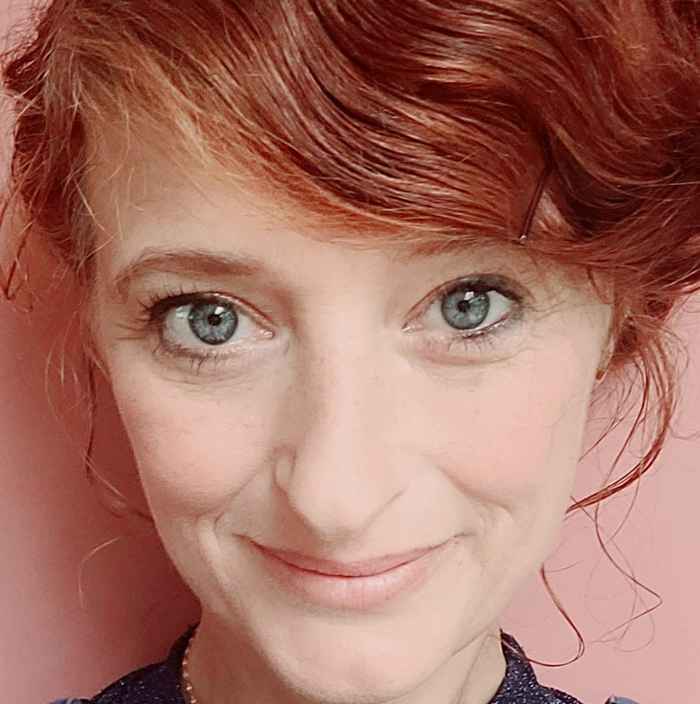
Hilde Brontsema (49) spent six years working for Milieudefensie (Friends of the Earth Netherlands) on different lawsuits against Shell, including the Climate Case against Shell and the case concerning oil pollution in Nigeria. She further made several documentaries about the oil spills in Nigeria, including My Letter to the Oil Men (Mijn brief aan de oliemannen), which won multiple awards. Inspired by lawyers such as Channa Samkalden and Roger Cox—both of whom fought legal battles against Shell—Brontsema has started studying law. As she says, she wants to become “a very efficient activist.”
Attribution for photograph used: “Fossil Free Culture NL bij Nemo” by CODE ROOD, CC BY-SA 2.0
https://creativecommons.org/licenses/by-sa/2.0/deed.en