ArtiShock #26 x Heritage and Horizon: Henna stories
- Date
- 8 October 2026
- Time
- 16:00 -18:30
- Location
- BG 3
- Room
- VOX-POP
In this ArtiShock x Henna Stories workshop, henna artist Fatima Oulad Thami tells us about the cultural context of henna and the meaning behind various henna patterns and symbols. Fatima is deeply connected to the Moroccan and Amazigh traditions of henna painting. In her ongoing project "Henna Stories" she explores the history and significance of henna through storytelling, and explores the symbolism behind various patterns and motifs.
For Fatima, henna also carries a great responsibility, because it is a way of passing on stories, knowledge and traditions from one generation to the next. As such, henna art constitutes a valuable form of (women’s) immaterial cultural heritage that must be appreciated and preserved.
During this workshop, you’ll be introduced to the significance and traditions surrounding henna in an accessible and interactive way. You’ll start working with henna, and discuss topics such as cultural heritage, identity and the ways in which traditions are passed on and can take on new forms.
Programme
16:00 Introduction by Fatima Oulad Thami
16:15 Start of the henna workshop
18:00 – 18:30 Wrap-up and tidying up
After the introduction, you will create your own design on a pre-coloured 10 × 10 cm canvas, inspired by Amazigh symbols and traditional henna motifs. You may take this canvas home at the end of the workshop. If there is time, you will also have the opportunity to apply henna to themselves. During the festive closing event on 22 October, there will be plenty of opportunity to further practise henna painting, either on canvas or on the skin.
Practical information
Participation is free. The workshop is both English and in Dutch.
Location: VOX-POP, Binnengasthuisstraat 9.
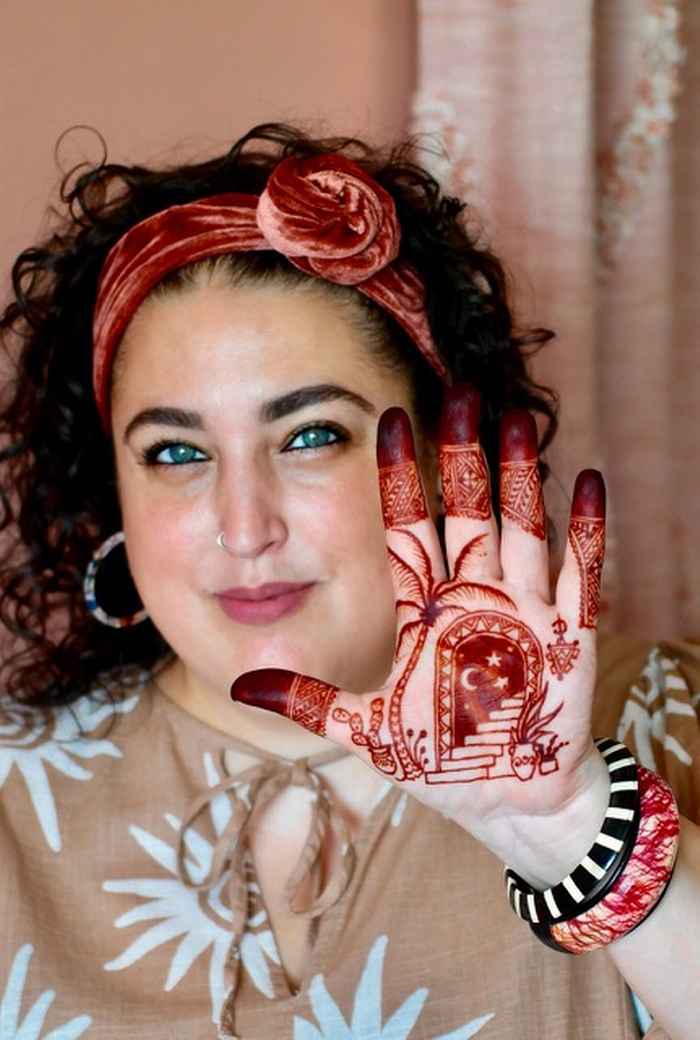
Fatima Oulad Thami is a henna artist deeply rooted in Moroccan and Amazigh traditions. Through henna as an artistic medium, she connects cultural heritage, women’s craftsmanship, and generations of knowledge.
By applying henna to colonial archival images, she restores dignity and a central place to women who were portrayed as exotic and erotic. In doing so, she challenges stereotypical representations and reclaims cultural narratives.